













We’ve all had that moment at the airport: navigating the crowded security line, dodging luggage wheels, and heading straight for the calm, cushioned comfort of the airport lounge. You pull out a familiar credit card, swipe it at the front desk, and step inside for a hot breakfast and a quiet cup of coffee.
If you’ve traveled recently, you might have noticed something different at that front desk: longer faces, confused arguments, and red decline screens.
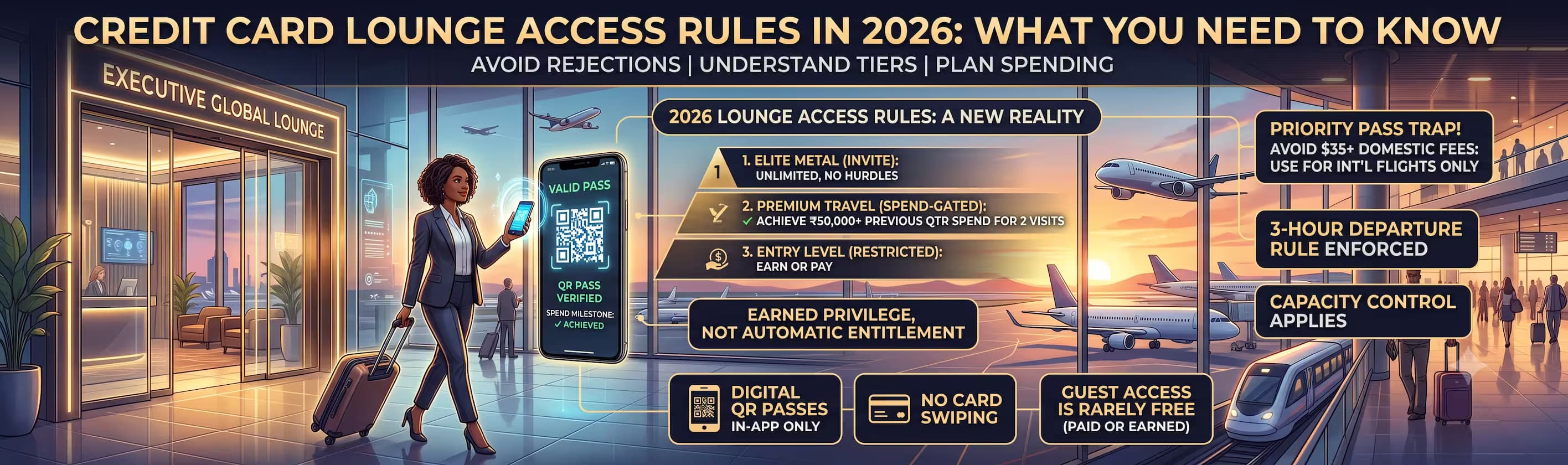
The era of easy, unconditional airport lounge access with entry-level and mid-tier cards is officially behind us. Between sky-high airport terminal rents, unprecedented terminal foot traffic, and banks trimming their loyalty budgets, the rules have undergone their biggest overhaul in a decade.
Getting past the frosted glass doors is still entirely possible—provided you understand the updated system before arriving at the terminal. Here is everything you need to know to avoid an embarrassing decline or an unexpected ₹2,500 walk-in fee.
1. The Big Shift: Lounge Access Is Now Earned, Not Given
Until recently, holding a qualifying card in your wallet was enough. You could leave it tucked away in a drawer for nine months, bring it on your annual holiday, tap it for a nominal verification fee, and walk in.
Banks have broadly replaced that "unconditional" model with rolling spend requirements.
For almost all entry- and mid-tier credit cards:
- The Previous Quarter Milestone: To unlock a complimentary lounge visit in the current quarter (e.g., April to June), you must have spent a specific target—typically between ₹35,000 and ₹60,000—in the preceding quarter (January to March).
- The Monthly Billing Threshold: Co-branded and lifestyle cards increasingly look at the previous month's statement balance, demanding anywhere from ₹10,000 to ₹25,000 in monthly spends to unlock one visit.
If you miss the target by even a fraction, the lounge terminal simply flags your account as ineligible.
The Spend Trap: What Doesn’t Count
Hitting that spend target requires vigilance. Most major issuers have trimmed the transaction categories that contribute toward milestone calculations.
The following purchases frequently earn zero progress toward your lounge spend thresholds:
- Digital wallet reloads
- Rent and property management payments
- Government taxes and challans
- Educational and tuition fee payments
- Fuel and service station transactions
If you spent ₹40,000 last quarter but ₹20,000 went toward monthly rent, you haven’t hit a ₹35,000 lounge milestone.
2. Where Does Your Card Stand Today?
Credit cards have settled into three distinct categories when it comes to terminal privileges.
| Card Category Typical Annual Fee Access Model What to Expect | ||||
| Super-Premium / Elite Metal | (e.g., Infinia, Axis Reserve, Amex Plat) | ₹10,000 – ₹50,000+ | Unconditional | High fees already subsidize entry. Unlimited domestic & international access, often with guest privileges and dedicated desks. |
| Mid-Tier & Travel Cards | (e.g., Regalia Gold, Sapphiro, Vistara Co-branded) | ₹1,000 – ₹5,000 | Spend-Gated | 1 to 2 visits per quarter, contingent on hitting the bank's rolling spend target in the preceding cycle. |
| Entry-Level & Cashback | (e.g., Amazon Pay, SimplyCLICK, Coral) | Free – ₹500 | Restricted / Phased Out | Most have cut domestic lounges entirely or set spend requirements so high they defeat the card's purpose. |
3. Say Goodbye to the Physical Card Swipe
If you are accustomed to handing your card to the receptionist, be prepared to download your bank’s mobile app instead. Issuers and lounge aggregators have transitioned toward dynamic digital QR passes.
Why the Change?
- Queue Congestion: Checking network eligibility manually took 30 to 60 seconds per passenger, backing lines into the main walkway.
- Card Sharing: Travelers regularly handed spare cards to relatives or friends who were traveling on separate itineraries.
How It Works Now
Before heading through security, open your banking or concierge app. If your prior spends cleared the quarterly milestone, the app generates a time-sensitive QR pass. The desk agent scans this code alongside your boarding pass. If the names don’t match, you don’t get in.
4. The Priority Pass Trap (Don’t Lose $35 by Mistake)
This remains one of the costliest misunderstandings in frequent travel.
When you receive a premium credit card, it often arrives with a sleek black Priority Pass or LoungeKey card intended for international travel.
Important: Never present an international Priority Pass at a domestic terminal lounge within your home country unless your specific card benefits explicitly mandate it.
Domestic lounges have direct clearing agreements with local banks and domestic networks (like RuPay, Visa, and Mastercard domestic routes). If you present an international pass at a domestic desk:
- The system bypasses your domestic bank quota.
- It bills the visit directly to your credit card as a standard overseas walk-in visit.
- You end up with a surprise charge of $32 to $35 USD (plus foreign conversion and taxes) on your next statement.
The Golden Rule: Use your primary credit card (or banking app QR) for domestic flights. Save Priority Pass strictly for layovers and departures outside your home country.
5. Taking Family? Read the Fine Print on Guests and Kids
Traveling solo for work is simple; traveling with family has become far more restrictive.
- Guest Allowances: Unless you hold an elite metal card that explicitly writes "Complimentary Guest Visits" into its charter, your travel partner cannot use your quota. Swiping your card twice will burn one complimentary visit for you and charge a commercial walk-in fee for your companion.
- Child Admissions: The cutoff age for free child entry has tightened. While infants under two typically enter free, children aged two and older require their own valid card, an add-on card allowance, or a paid pass.
- Add-On Cards: Many banks have restricted supplementary cards. Some have discontinued lounge perks on add-ons entirely, while others pool your primary card's quarterly allowance across the entire account. If you give an add-on card to your partner and you both enter together, you consume two passes from your combined quota.
6. Arrival Rules and the 3-Hour Clock
Even with verified spends and an approved QR pass, terminal capacity controls apply:
- The 3-Hour Departure Rule: To prevent travelers from treating lounges as day-long co-working hubs, admission is strictly restricted to three hours prior to your scheduled flight departure. If you arrive five hours early, expect to be asked to wait until the window opens.
- Departures Only: Complimentary bank access is virtually never valid on arrival. Once you land, collect your bags, and exit security, you cannot use your card to access airside lounges unless you hold a specific arrival-lounge pass (common only in select major international hubs).
Your Pre-Flight Checklist
Before heading out for your next trip, take three quick steps:
- Audit Your Spending 10 Days Early: Log into your card issuer's app and verify your lounge eligibility status for the current quarter.
- Consolidate Everyday Purchases: Instead of putting ₹10,000 on three different cards, run your daily grocery, utility, and dining expenses through one core card so you reliably hit the quarterly milestone.
- Have a Backup Plan: If your flight is delayed and the lounge has a 45-minute waitlist, decide in advance whether the wait is worth it. Grabbing a quiet sandwich and coffee at an airport bistro often costs ₹600 to ₹800—far cheaper than stressing over a crowded buffet.
Lounge access is still a valuable travel comfort, but the playbook has changed. Treat it as an earned bonus rather than a guaranteed perk, plan your expenses accordingly, and enjoy the pre-flight quiet.