











CardsGurujiCompare · Choose · SaveCheck all categoriesCheck all issuers
⌘K
Card Categories
Pick a card that matches how you actually spend.
Card Issuers
Explore cards from India's leading banks.
India's credit-card market now spans 100+ active products across 25+ banks and NBFCs — each with a different mix of reward rates, annual fees, joining bonuses, and lifestyle perks. Picking blindly can cost you ₹2,000–₹12,000 per year in missed rewards or avoidable fees. Unlike aggregator sites that rank by affiliate commission, CardsGuruji rates every card on objective criteria: effective cashback rate, fee-to-benefit ratio, lounge-access value, and real-world redemption flexibility.
Top Cards from Our Database — 2026 — Annual-fee figures may be post-waiver. Always verify on the issuing bank's website before applying.
| # | Card Name | Bank | Annual Fee | Joining Fee | Rating |
|---|---|---|---|---|---|
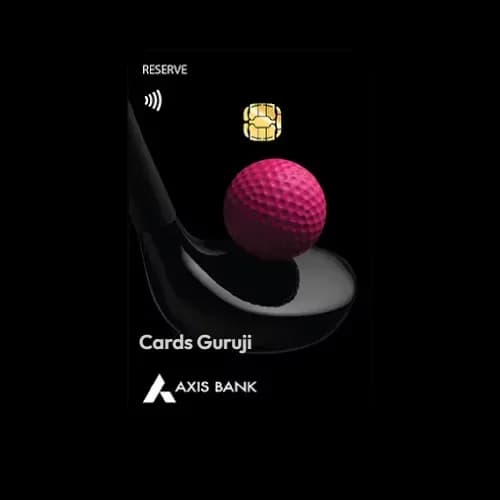
| 1 | Axis Bank Reserve Credit Card | Axis Bank | ₹ 50,000 | — | — |
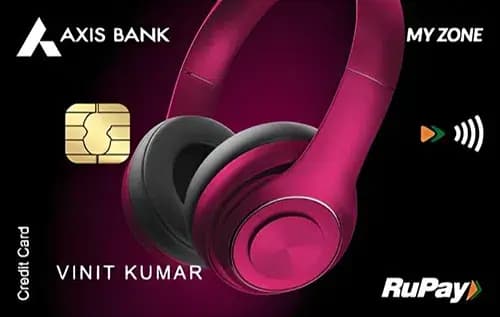
| 2 | Axis Bank My Zone Credit Card | Axis Bank | ₹ 500 | — | — |
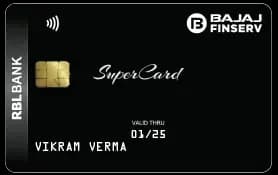
| 3 | RBL Bank Bajaj Finserv SuperCard | RBL Bank | ₹ 499 | — | — |
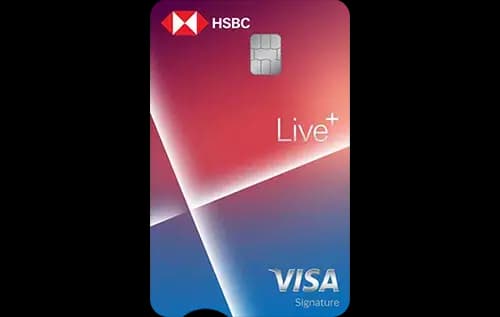
| 4 | HSBC Live+ | HSBC | ₹ 999 | — | — |
| 5 | AU Bank LIT Credit Card | AU Small Finance Bank | Lifetime Free | — | — |
| 6 | AU Zenith+ Credit Card | AU Small Finance Bank | ₹ 4,999 | — | — |


Benchmark cards side-by-side using our real-time comparison engine to evaluate fees, rewards, and perks.
Compare HDFC's reward point program against Axis Bank's multi-partner travel transfer benefits.
See whether 5% flat Amazon cashback beats 2% unlimited offline and utility bill payments.
Evaluate 5% online merchant cashback against Google Pay bill payments and offline earn rates.
The definitive comparison between India's two most popular online shopping co-branded cards.
Weigh annual milestone travel vouchers and Taj stay benefits against flexible flight point redemptions.
Discover the best secured credit card for building your CIBIL score with zero prior credit history.
| Card Tier | Min. Income (Salaried) | Min. Income (Self-Employed) | Credit-Score Criteria | Age Range |
|---|---|---|---|---|
| Entry-Level (₹0–₹500 fee) | Check issuer terms | Check issuer terms | Set by issuer; check card terms | 18–65 yrs |
| Mid-Range (₹500–₹2,500 fee) | Check issuer terms | Check issuer terms | Set by issuer; check card terms | 21–65 yrs |
| Premium (₹2,500–₹5,000 fee) | Check issuer terms | Check issuer terms | Set by issuer; check card terms | 21–65 yrs |
| Super-Premium (₹5,000+ fee) | Check issuer terms | Check issuer terms | Set by issuer; check card terms | 25–65 yrs |
Eligibility varies by card and issuer. Verify current requirements directly with the issuer; these categories do not represent official eligibility thresholds.
CardsGuruji maintains an editorially independent database of every active credit card in India. Each card is reviewed for fee accuracy, reward-rate correctness, and current offer validity. Listings are updated regularly based on official bank schedule of charges.
Everything you need to know about choosing, applying for, and managing credit cards in India.
For first-time applicants and beginners, the best credit cards in India offer zero annual fees (Lifetime Free) and simple, direct rewards. Cards like the Amazon Pay ICICI Bank Credit Card, Kotak 811 Super.Money, or an FD-backed card (like IDFC FIRST WOW) are ideal. They require minimal documentation, provide flat cashback on everyday spends, and help you build a solid CIBIL credit score without recurring maintenance costs.
There is no single credit-score cutoff that applies to every credit card. Issuers set their own criteria and assess income, employment, existing obligations, repayment history and other factors. Check the issuer's current terms; general score guidance does not guarantee approval. A secured credit card may be worth exploring if you have limited credit history, subject to the issuer's terms.
Yes, genuine lifetime free (LTF) credit cards do not charge joining fees or recurring annual renewal fees for life. However, "free" only applies to annual membership fees. Standard operational charges still apply if incurred, such as finance charges (interest of 36% to 45% APR on unpaid balances), late payment penalties, foreign currency markup fees (typically 3.5%), and ATM cash withdrawal fees. Always pay your full statement balance each month to use your card completely fee-free.
The interest-free grace period on credit cards in India ranges from 20 to 50 days, calculated from the transaction date to the payment due date. If your monthly billing cycle starts on the 1st and ends on the 30th, with a due date on the 20th of the following month, a purchase made on the 2nd enjoys 48 days of zero interest. However, a purchase made on the 29th gets only 21 days. Crucially, the grace period applies only if you pay the entire "Total Amount Due" by the due date. Paying only the "Minimum Amount Due" revokes the grace period and incurs interest on all new transactions.
The minimum salary required for entry-level credit cards in India is typically ₹15,000 to ₹25,000 per month for salaried employees working at registered corporate firms. Mid-tier cards offering airport lounge access and higher reward rates usually require a net monthly income of ₹35,000 to ₹50,000. Super-premium cards (like HDFC Infinia or Axis Olympus) demand an in-hand monthly salary of ₹1.5 Lakh to ₹3 Lakh or an annual ITR exceeding ₹25 Lakhs.
Direct cashback cards automatically credit monetary savings back to your monthly statement balance or digital wallet (e.g., 5% cashback on Amazon or Flipkart), giving guaranteed ₹1 for ₹1 value without redemption fees. Reward point cards award points per ₹100 or ₹150 spent, where points must be redeemed for flight bookings, hotel nights, or catalog merchandise. Points can yield a significantly higher effective return (often 5% to 15%) when transferred to airline frequent flyer partners, but require monitoring point expiration and catalog devaluation risks.
No. Browsing credit cards, calculating reward returns, or using comparison tools on CardsGuruji has zero impact on your credit score. These are classified as "Soft Inquiries" (or non-bureau checks). Your CIBIL score is only affected when you officially click through and submit a formal credit card application on the bank's website, which prompts the lender to execute a "Hard Inquiry" (typically dropping your score by an insignificant 2 to 5 points temporarily).
Most card issuers offer a built-in spend-based annual fee waiver. If you cross the bank's stipulated spending milestone during the membership year (e.g., ₹1 Lakh spend for entry cards or ₹4 Lakhs for premium cards), the renewal fee for the upcoming year is automatically reversed on your statement. If you fall slightly short of the milestone, you can also call customer care to request a fee reversal or points-for-fee adjustment based on good on-time payment track records.
Yes, holding multiple credit cards across 2 to 3 different banks is a popular financial strategy in India. Holding cards from different issuers allows you to maximize merchant discount tie-ups (e.g., HDFC 10% instant discounts on Amazon, ICICI discounts on Flipkart), separates business expenses from personal spends, and increases your aggregate credit limit, which naturally lowers your Credit Utilization Ratio (CUR) and boosts your credit score.
To apply for a credit card online in India, you need: (1) Proof of Identity & Address (Aadhaar Card, Passport, or Voter ID), (2) Permanent Account Number (PAN Card), (3) Proof of Income (latest 2 to 3 months' salary slips and 3 months' bank account statement for salaried employees, or 2 years' audited ITR with computation of income for self-employed individuals). Many modern issuers now complete verification instantly via Video KYC (V-KYC) and Aadhaar OTP without requiring physical paper submissions.