














Best Premium Credit Cards in India — November 2026 [Page 3]
Page 3 of our comprehensive premium credit card directory highlights accessible entry-level options, secured fixed-deposit credit cards, and niche products tailored for emerging spenders and credit builders across India in 2026. Whether you are looking to establish your credit score for the first time or seeking a cost-effective secondary card for specific everyday expenses, the cards featured on this page—from established issuers including IDFC FIRST Bank, Kotak Mahindra Bank, Axis Bank, ICICI Bank—provide balanced reward rates with low financial barriers to entry. Notable listings on this page, such as Club Vistara IDFC First Credit Card, Kotak Zen Signature Credit Card, Axis Bank Privilege Credit Card, prove that disciplined credit management can deliver tangible value at minimal cost.
For applicants with limited credit history or those recovering from past financial setbacks, secured premium credit cards backed by a fixed deposit may be an option, subject to the issuer's application criteria. Issuers set their own documentation and deposit terms. Responsible repayments may help build credit history over time, but no particular score or timeframe is guaranteed.
Review the comprehensive comparison table below to examine active premium credit cards featured on this page, detailing verified annual membership fees, joining charges, issuing banks, and editorial ratings to help you find the right card to launch or strengthen your financial journey.
Premium Credit Cards on This Page — (2026) — Verified fees and ratings. Always verify the latest terms and conditions on the official issuing bank portal before applying.
| # | Card Name | Bank | Annual Fee | Joining Fee | Rating |
|---|---|---|---|---|---|
| 1 | Club Vistara IDFC First Credit Card | IDFC FIRST Bank | ₹ 4,999 | — | — |
| 2 | Kotak Zen Signature Credit Card | Kotak Mahindra Bank | ₹ 1,500 | — | — |
| 3 | Axis Bank Privilege Credit Card | Axis Bank | ₹ 1,500 | — | — |
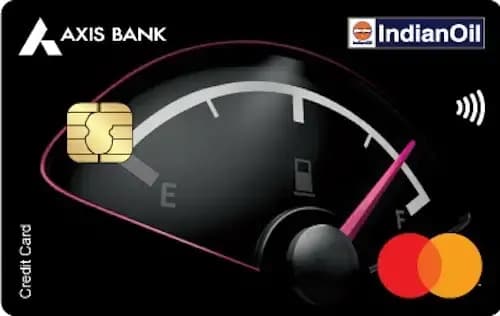
| 4 | IndianOil Axis Bank Premium Credit Card | Axis Bank | ₹ 1,000 | — | — |
| 5 | Axis Bank Horizon Credit Card | Axis Bank | ₹ 3,000 | — | — |
| 6 | Times Black ICICI Credit Card | ICICI Bank | ₹ 20,000 | — | — |
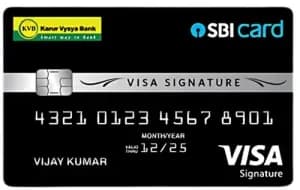
| 7 | Karur Vysya Bank SBI Signature Credit Card | SBI | ₹ 4,999 | — | — |
| 8 | SBI Aurum Credit Card | SBI | ₹ 9,999 | — | — |
Browse 34 premium credit cards — page 3 of 5









FAQs About Premium Credit Cards in India (2026) — Page 3
Helpful answers and expert guidance about choosing, maximizing rewards, and applying for premium credit cards in India.
Using a premium credit card responsibly is one of the most effective ways to establish a strong credit profile. Banks report your repayment history to CIBIL and other credit bureaus every 30 days. Making 100% on-time payments and maintaining utilization below 30% for 6 to 12 consecutive months can build a solid 750+ credit score.
Self-employed professionals, business owners, and freelancers may apply for premium credit cards using income documentation accepted by the issuer, such as Income Tax Returns or bank statements. Requirements vary by issuer and card. Secured cards may be another option; check the issuer's terms, as a fixed deposit does not guarantee approval.
Unsecured cards are issued based on the issuer's assessment of the applicant's profile and eligibility criteria. Secured cards are backed by a fixed deposit (FD) pledged with the bank; the issuer determines the deposit and credit-limit terms, and collateral does not guarantee approval.
Banks periodically review cardholder performance every 6 to 12 months. Cardholders who maintain consistent spending, low utilization, and flawless on-time repayments often receive pre-approved credit limit enhancement offers within mobile banking apps that can be activated with a single tap.
Reward points can typically be redeemed via the bank's rewards portal for: (1) statement credit or cashback against outstanding balances; (2) brand gift vouchers (Amazon, Flipkart, Myntra); (3) air miles conversion with airline partners; or (4) flight and hotel bookings. Direct cashback cards provide the simplest redemption with zero expiry.
Yes. All credit cards in India incorporate EMV chip technology and 128-bit/256-bit encryption. For contactless tap-to-pay transactions (up to ₹5,000 without PIN), cards use tokenized NFC communication. Online transactions require mandatory two-factor authentication (OTP) sent to your registered mobile number.
Holding 2 to 3 complementary cards can optimize rewards across diverse categories (e.g. pairing a zero-fee card for everyday expenses with a category-specific shopping or travel card). Having multiple cards also increases your aggregate credit limit, making it easier to keep your overall utilization ratio below 30%.
If rejected: (1) check your CIBIL report for errors or recent negative remarks; (2) avoid applying for other credit cards immediately, as multiple hard inquiries lower your score; (3) wait 3 to 6 months while improving your score; or (4) opt for a secured FD-backed credit card to build a solid repayment track record first.
You can secure your card via your mobile banking app by: toggling off international transactions and ATM withdrawals when not needed, setting lower daily transaction limits for online and POS transactions, enabling instant SMS/email alerts, and never sharing OTPs or CVVs.
Consider upgrading when your annual salary increases, your spending consistently exceeds your current credit limit, or your lifestyle demands premium perks like international lounge access, lower forex markup, or higher milestone reward vouchers that outweigh any renewal fees.