













The 2026 Festive Tech Squeeze: Decoding Amazon and Flipkart's Record-Breaking Sales Amidst Electronics Price Hikes
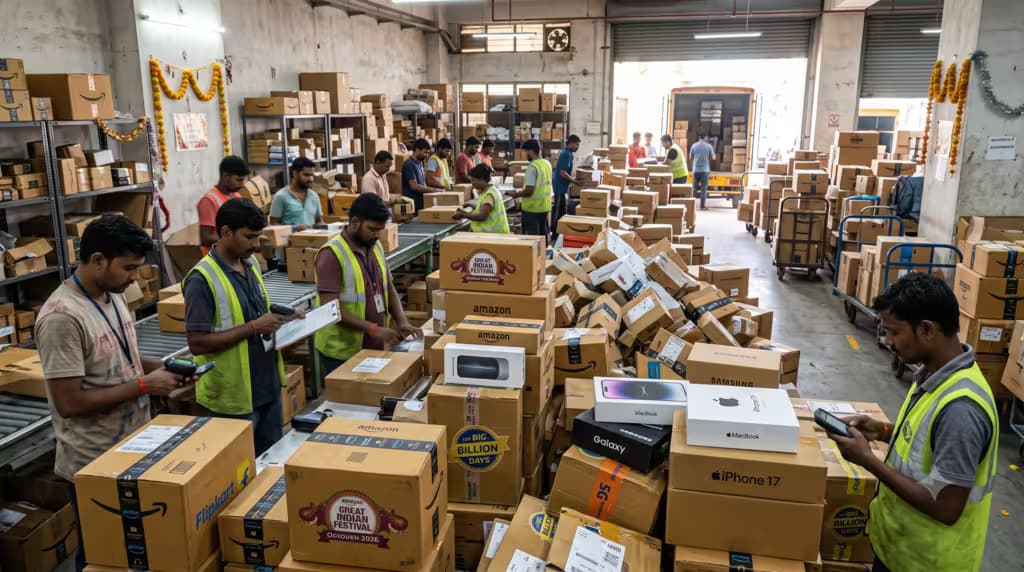
India's festive season has always been synonymous with spectacular retail events, but the October 2026 editions of the Amazon Great Indian Festival and Flipkart Big Billion Days have rewritten the playbook. Entering this season, the consumer electronics market faced a unique predicament: a global semiconductor and memory component crunch—fueled by the insatiable demand for AI data centers—had steadily driven up the baseline prices of smartphones, laptops, and smart appliances. Many budget and mid-range devices saw their prices hiked just months before the sales.
Yet, defying market logic and inflation concerns, the initial sales reports from both e-commerce giants indicate an unprecedented surge in consumer spending. Rather than shying away from higher prices, Indian consumers are doubling down on premium technology, leveraging aggressive bank offers, extended EMIs, and exchange bonuses to offset the hardware price inflation. This blog provides a deep dive into the official sales reports, the shifting consumer psychology, the top-buying trends, and the standout offers that are defining the 2026 festive market.
The Paradox of 2026: Higher Prices, Record-Breaking Traffic
If there were fears that inflated electronic prices would dampen festive spirits, the opening hour of the sales laid them to rest. The preliminary sales data reveals a fascinating trend: the volume of shoppers is expanding, primarily driven by non-metro cities and Gen Z buyers.
- Unprecedented Traffic: Flipkart recorded a staggering 6.3 million concurrent users in a single minute during the opening hour of the 13th Big Billion Days sale.
- The Tier 2 and Tier 3 Surge: New customer acquisition on Flipkart surged by 34%, with non-metro buyers leading the demand. Sellers in Tier-2+ cities, including MSMEs from regions like Bhiwandi, Panipat, and Hisar, saw their businesses grow 2.9 times.
- Amazon's Early Spike: Amazon reported an early 100% year-over-year growth in shopping volume during the midnight launch for Prime members, with tech and appliances leading the charge.
This data highlights a critical shift: the aspiration for digital connectivity and smart home upgrades in semi-urban India has outpaced the friction of rising costs.
Market Dynamics: The AI Boom and the Memory Chip Squeeze
To understand the current pricing structure, we must look at the global supply chain. The aggressive promotions currently seen on e-commerce platforms mask a deeper affordability crisis in the tech sector.
Throughout 2025 and 2026, technology behemoths heavily invested in AI infrastructure, requiring massive quantities of High-Bandwidth Memory (HBM). As global chipmakers redirected their production lines to prioritize these high-value AI components, the supply of conventional DRAM and NAND flash memory—essential for consumer smartphones and laptops—tightened significantly. This supply squeeze forced original equipment manufacturers (OEMs) to either absorb the costs, alter hardware specs, or increase retail prices.
Consequently, the "discounts" seen in the sub-Rs. 25,000 smartphone segment during this sale are often just reversing the quiet price hikes implemented earlier in the year, bringing the devices back to their original launch prices. True value is heavily concentrated in the premium flagship segments, where margins are wider, allowing brands to offer genuine price cuts.
The "Premiumization" Wave: What India is Actually Buying
Because budget tech isn't offering the rock-bottom deals of previous years, the 2026 sales are marked by Premiumization. Consumers are choosing to buy fewer, but higher-quality, longer-lasting products. The highest velocity of sales isn't at the entry-level; it is in the upper-mid and premium tiers.
1. The Tablet Renaissance
In a surprising twist, tablets have emerged as the fastest-growing tech category. Flipkart reported a massive 73% year-over-year growth in tablet sales during the first hour. Driven by remote work flexibility, digital education, and the launch of AI-integrated models like the Samsung Galaxy Tab S10 FE+ and the latest Apple iPads, the tablet is bridging the gap between smartphones and traditional laptops.
2. Large Home Appliances
Despite rising component costs, large appliances saw a 30% YoY growth on Flipkart right out of the gate. Consumers are actively upgrading their living spaces. There is massive demand for high-capacity washing machines, energy-efficient inverter air conditioners, and premium Smart TVs featuring Mini-LED and QLED technologies.
3. The Refurbished and Entry-Level 5G Market
While the premium segment booms, budget-conscious buyers are flocking to entry-level 5G models. Brands like Poco, Mivi, and Lava have held last year's pricing on select models, drawing massive volume. Furthermore, because new mid-range devices are pricier, there is a distinct spike in the refurbished electronics market as buyers seek premium builds without the 2026 price tag.
Category-Wise Breakdown: Top Selling Electronics and Flagship Offers
Let’s break down the most lucrative offers and the highest-selling products across both Amazon and Flipkart that are currently dominating the market.
Smartphones: The Battle of the Flagships
The smartphone segment remains the highest grosser, with both platforms fighting aggressively for market share through bank tie-ups and exchange bonuses.
- Apple iPhone 17 (Flipkart): Apple's latest mainstream flagship is the crown jewel of the Big Billion Days. With an effective price starting at Rs. 79,999 (down from its Rs. 99,900 MRP) after bank offers and basic exchange bonuses, it is driving immense traffic. Meanwhile, the older iPhone 16 is seeing major traction on Amazon, dropping to an effective Rs. 71,999.
- Samsung Galaxy S25 Ultra 5G (Amazon): For Android purists, this is the ultimate deal. Launched at Rs. 1,29,999, the Snapdragon 8 Elite-powered powerhouse is available for an astonishing Rs. 84,999 inclusive of coupon and card discounts. This Rs. 45,000 price drop makes it the most sought-after ultra-premium Android phone of the season.
- The Upper Mid-Range Champions: Devices like the OnePlus 15 (effective Rs. 81,999), the Xiaomi 17 with Leica optics (effective Rs. 59,999), and the Nothing Phone (4b) at a highly competitive Rs. 24,999 are capturing the audience that wants flagship features without crossing the Rs. 1 Lakh threshold.
- Budget 5G Warriors: The iQOO Z11 Lite 5G on Amazon (Rs. 15,499) and the Mivi One 5G on Flipkart (starting at Rs. 11,999) are dominating the volume charts for buyers transitioning from 4G.
Laptops and Computing: The AI-PC Revolution
The PC market in 2026 is defined by the integration of on-device AI. Consumers are willing to pay a premium for machines capable of handling local AI workloads.
- Apple MacBook Air M5: Available on Flipkart for an effective price of Rs. 1,24,990 (16GB/512GB configuration), this is a massive drop from its Rs. 1,49,900 MRP. Coupled with No-Cost EMI, it is the top choice for professionals and creatives.
- Samsung Galaxy Book4 Series: Amazon is offering the Core i5 variant at an aggressive Rs. 54,990, making premium thin-and-light Windows computing highly accessible.
- HP OmniBook X Flip: Aimed at the premium convertible market, this AI-powered machine is listed at Rs. 99,990, targeting executive users and digital artists.
Smart Home and Large Appliances
As consumers upgrade their homes, high-ticket appliances are moving faster than ever, driven by aggressive bundled offers.
- Samsung 55-inch Mini LED Smart TV: Listed at Rs. 59,990 on Flipkart, this TV offers premium Mini LED technology and 144Hz gaming support, completely undercutting standard OLED pricing.
- LG 55-inch Nano 4K Smart TV: Featuring the Alpha 7 AI processor and integrated Google Gemini, this unit is selling rapidly at Rs. 85,990 for buyers deeply invested in the smart home ecosystem.
How Consumers are Financing the Hikes: The Credit Illusion
If electronics are inherently more expensive in 2026 due to component shortages, how are sales volumes growing? The answer lies in the sophisticated financial engineering orchestrated by the e-commerce platforms and partner banks. Consumers are no longer just buying products; they are buying financial packages.
1. The Power of the Co-Branded Credit Card
The flat 10% instant discount (usually capped at Rs. 1,500 to Rs. 2,000) offered by SBI on Amazon and Axis/ICICI on Flipkart is just the entry point. The real enablers are the Amazon Pay ICICI and Flipkart Axis Bank credit cards, which offer 5% unlimited cashback. On a Rs. 85,000 smartphone purchase, that uncapped cashback is worth Rs. 4,250, significantly reducing the financial burden of the inflated base price.
2. Long-Term No-Cost EMI
Platforms have pushed No-Cost EMI tenures from the standard 3-6 months up to 12 and sometimes 24 months for premium devices. This psychological pricing strategy breaks down an intimidating Rs. 1,20,000 laptop into manageable Rs. 10,000 monthly chunks. This credit expansion is the primary driver behind the "premiumization" trend—consumers are stretching their budgets because the immediate out-of-pocket impact is softened.
3. Enhanced Exchange Programs
To sweeten the deal, brands are offering unprecedented exchange bonuses. When buying the latest iPhone or Samsung Galaxy, platforms are offering "bump-up" values on old devices, sometimes adding Rs. 5,000 to Rs. 10,000 over the standard valuation of the old phone. This effectively subsidizes the component price hike, keeping the upgrade cycle intact.
Future Outlook: Will the Momentum Sustain?
The October 2026 festive sales are a masterclass in consumer resilience and platform adaptability. Despite the genuine macroeconomic headwinds and the AI-driven memory chip crunch that have undeniably raised the cost of manufacturing electronics, the Indian consumer's appetite for technological upgrades remains voracious.
Amazon and Flipkart have successfully navigated this price hike by changing the narrative. They have shifted the focus away from "cheap tech" and towards "accessible premium tech," utilizing deep financial integrations to make high-end devices affordable on a monthly basis. The staggering 6.3 million concurrent users on Flipkart and the explosive growth in Tier 2 and Tier 3 cities prove that digital aspiration in India is price-inelastic when supported by the right financing structures.
However, market analysts caution that this high-velocity spending is heavily reliant on consumer credit. As the festive season concludes, we may see a prolonged stagnation in tech sales during the early months of 2027, as consumers spend time paying off their EMI obligations. But for now, the Great Indian Festival and the Big Billion Days have proven one thing: when it comes to upgrading their digital lives, Indian consumers will find a way to pay the premium.