













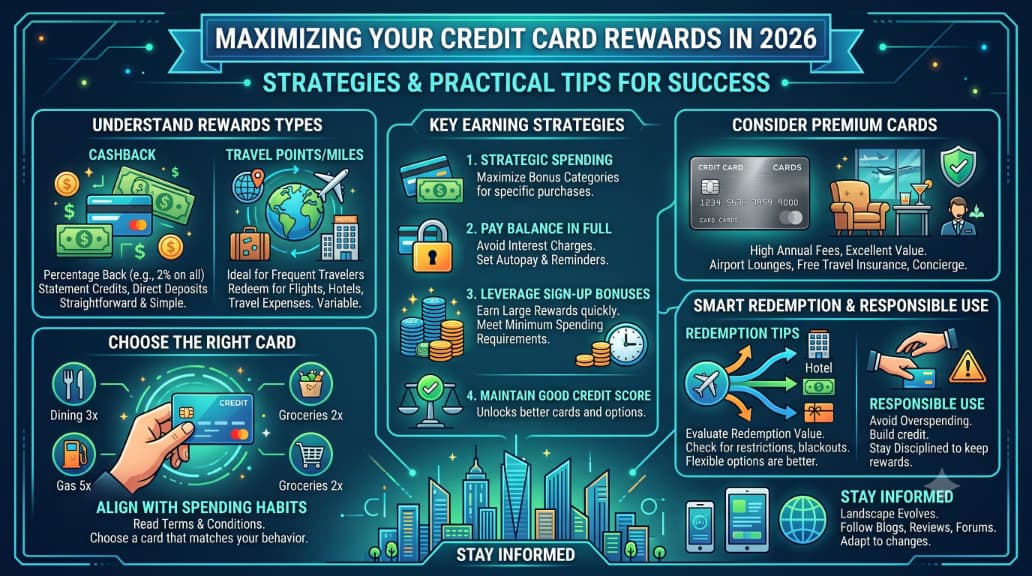
As we dive into 2026, it's essential to take a closer look at how you can maximize your credit card rewards.
With so many options available, it can be overwhelming to choose the right card and make the most out of its rewards program.
In this blog post, we'll explore the world of credit card rewards, discussing the best strategies to maximize your earnings and providing you with practical tips to get the most out of your card.
First and foremost, it's crucial to understand how credit card rewards work.
Most credit cards offer rewards in the form of points, miles, or cashback, which can be redeemed for various items such as travel, gift cards, or statement credits.
The key to maximizing your rewards is to choose a card that aligns with your spending habits and rewards preferences.
One of the most popular types of credit card rewards is cashback.
Cashback rewards offer a percentage of your purchase back as a statement credit or direct deposit.
For example, if you have a card that offers 2% cashback on all purchases, you'll earn $2 for every $100 you spend.
While cashback rewards are straightforward, they might not be the most lucrative option for everyone.
Another type of reward is travel points or miles.
These rewards are ideal for frequent travelers, as they can be redeemed for flights, hotel stays, or other travel-related expenses.
Travel rewards often come with more complexity, as the value of points or miles can vary greatly depending on the airline, hotel, or travel provider.
However, for those who travel regularly, a travel rewards card can be an excellent choice.
To maximize your credit card rewards, it's essential to understand the rewards structure and how it applies to your spending habits.
For instance, if you have a card that offers 3x points on dining and 1x point on all other purchases, you'll want to use that card for all your dining expenses to earn the most points.
On the other hand, if you have a card that offers 5x points on gas stations, you'll want to use that card for all your gas purchases.
In addition to understanding the rewards structure, it's also crucial to pay your balance in full each month.
Credit card interest can quickly erase any rewards you've earned, so it's essential to make timely payments and avoid interest charges.
Set up payment reminders or automate your payments to ensure you never miss a payment.
Another strategy to maximize your rewards is to take advantage of sign-up bonuses.
Many credit cards offer generous sign-up bonuses, such as 50,000 points or $500 cashback, after meeting a minimum spending requirement within a specified time frame.
These bonuses can be a great way to jumpstart your rewards earnings, but be sure to read the terms and conditions carefully to understand the requirements and any potential restrictions.
Furthermore, it's essential to keep an eye on your credit score, as it can significantly impact your ability to qualify for the best credit cards.
A good credit score can open up more options for you, allowing you to choose from a wider range of cards with better rewards programs.
On the other hand, a poor credit score can limit your options, making it more challenging to find a card that meets your needs.
In recent years, we've seen a rise in premium credit cards that offer high-end rewards and benefits.
These cards often come with higher annual fees, but they can provide exceptional value for those who use them regularly.
For example, some premium cards offer airport lounge access, travel insurance, or concierge services, which can be incredibly valuable for frequent travelers.
When it comes to redeeming your rewards, it's essential to understand the redemption options and any potential restrictions.
Some credit cards may have blackout dates or restrictions on travel redemptions, while others may offer more flexibility.
Be sure to read the terms and conditions carefully to understand how to get the most out of your rewards.
In conclusion, maximizing your credit card rewards in 2026 requires a combination of strategy, planning, and discipline.
By choosing the right card, understanding the rewards structure, and making timely payments, you can earn significant rewards and benefits.
Whether you're a frequent traveler or a casual shopper, there's a credit card out there that can help you maximize your rewards.
So, take the time to research and compare different cards, and don't be afraid to ask questions or seek advice from a financial expert.
With the right card and a solid understanding of the rewards program, you can unlock a world of benefits and rewards that will take your spending to the next level.
As you navigate the world of credit card rewards, remember that it's essential to be patient and disciplined.
Avoid overspending or accumulating debt, as this can quickly erase any rewards you've earned.
Instead, focus on making smart financial decisions and using your credit card responsibly.
With time and practice, you'll become a master of maximizing your credit card rewards and unlocking the full potential of your card.
Finally, it's worth noting that the credit card landscape is constantly evolving, with new cards and rewards programs emerging all the time.
To stay ahead of the game, it's essential to stay informed and up-to-date on the latest developments.
Follow financial blogs, read reviews, and join online forums to stay informed and learn from others.
By staying informed and adapting to changes in the market, you can ensure that you're always getting the most out of your credit card rewards.