













As a seasoned traveler, I've learned that having the right travel card can make all the difference in your journey.
From earning rewards and avoiding foreign transaction fees to enjoying travel insurance and airport lounge access, the best travel cards offer a wide range of benefits that can enhance your travel experience.
In this blog, we'll explore the top 5 travel cards for international trips, highlighting their features, benefits, and drawbacks to help you make an informed decision.
Whether you're a frequent flyer or an occasional traveler, this guide will provide you with the insights you need to choose the perfect travel card for your next adventure.
So, let's dive in and explore the world of travel cards!
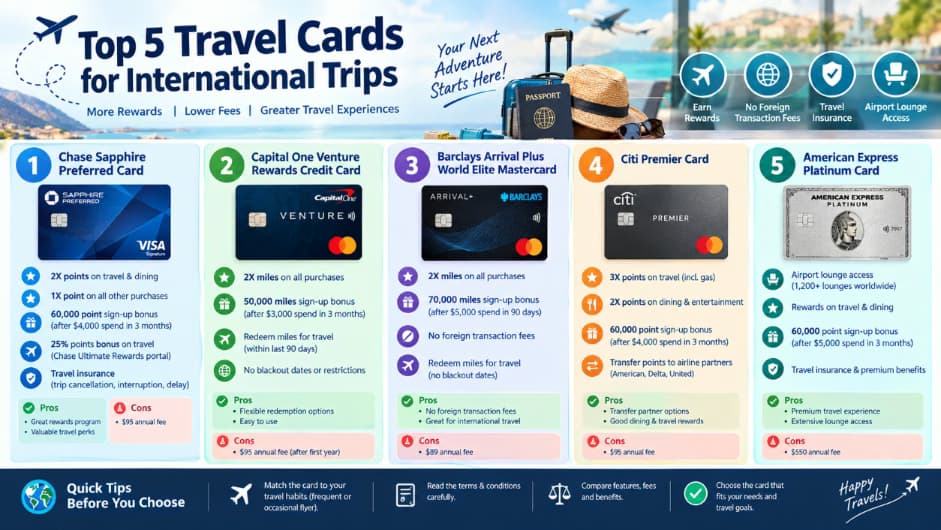
The first travel card on our list is the Chase Sapphire Preferred Card.
This card is a popular choice among travelers due to its generous rewards program, which offers 2X points on travel and dining purchases and 1X point on all other purchases.
The card also comes with a sign-up bonus of 60,000 points after spending $4,000 in the first 3 months, which can be redeemed for travel, cash back, or gift cards.
Additionally, the card offers a 25% points bonus when redeemed for travel through the Chase Ultimate Rewards portal, making it an excellent choice for travelers who want to maximize their rewards.
Another benefit of the Chase Sapphire Preferred Card is its travel insurance, which includes trip cancellation, trip interruption, and travel delay insurance.
This can provide peace of mind for travelers who are worried about unexpected events that may affect their trip.
However, the card does come with a $95 annual fee, which may be a deterrent for some travelers.
The next travel card on our list is the Capital One Venture Rewards Credit Card.
This card is known for its flexibility and ease of use, as it allows cardholders to earn 2X miles on all purchases and redeem them for travel purchases with no blackout dates or restrictions.
The card also comes with a sign-up bonus of 50,000 miles after spending $3,000 in the first 3 months, which can be redeemed for travel, cash back, or gift cards.
One of the unique features of the Capital One Venture Rewards Credit Card is its ability to redeem miles for travel purchases made within the last 90 days.
This means that cardholders can use their miles to offset the cost of flights, hotels, and other travel expenses, making it an excellent choice for travelers who want to maximize their rewards.
However, the card does come with a $0 annual fee for the first year, and then $95 thereafter, which may be a consideration for some travelers.
The third travel card on our list is the Barclays Arrival Plus World Elite Mastercard.
This card is a great choice for travelers who want to earn rewards on all their purchases, as it offers 2X miles on all purchases and allows cardholders to redeem them for travel purchases with no blackout dates or restrictions.
The card also comes with a sign-up bonus of 70,000 miles after spending $5,000 in the first 90 days, which can be redeemed for travel, cash back, or gift cards.
One of the benefits of the Barclays Arrival Plus World Elite Mastercard is its lack of foreign transaction fees, making it an excellent choice for international travelers who want to avoid extra charges on their purchases.
However, the card does come with a $89 annual fee, which may be a consideration for some travelers.
The fourth travel card on our list is the Citi Premier Card.
This card is a great choice for travelers who want to earn rewards on their travel and dining purchases, as it offers 3X points on travel, including gas stations, and 2X points on dining and entertainment.
The card also comes with a sign-up bonus of 60,000 points after spending $4,000 in the first 3 months, which can be redeemed for travel, cash back, or gift cards.
One of the unique features of the Citi Premier Card is its ability to transfer points to airline partners, including American Airlines, Delta, and United, making it an excellent choice for travelers who want to maximize their rewards.
However, the card does come with a $95 annual fee, which may be a consideration for some travelers.
The final travel card on our list is the American Express Platinum Card.
This card is a premium travel card that offers a wide range of benefits, including airport lounge access, travel insurance, and rewards on travel and dining purchases.
The card comes with a sign-up bonus of 60,000 points after spending $5,000 in the first 3 months, which can be redeemed for travel, cash back, or gift cards.
One of the benefits of the American Express Platinum Card is its airport lounge access, which includes access to over 1,200 lounges worldwide, making it an excellent choice for travelers who want to enjoy a more luxurious travel experience.
However, the card does come with a $550 annual fee, which may be a deterrent for some travelers.
In conclusion, the right travel card can make a significant difference in your travel experience.
Whether you're looking for rewards, travel insurance, or airport lounge access, there's a travel card out there that can meet your needs.
By considering the features, benefits, and drawbacks of each card, you can make an informed decision and choose the perfect travel card for your next adventure.
So, which travel card will you choose?
Will you go for the Chase Sapphire Preferred Card, the Capital One Venture Rewards Credit Card, the Barclays Arrival Plus World Elite Mastercard, the Citi Premier Card, or the American Express Platinum Card?
Whatever your choice, make sure to read the terms and conditions carefully and understand the benefits and drawbacks of each card before making a decision.
Happy travels!
As a final tip, it's essential to consider your travel habits and preferences when choosing a travel card.
If you're a frequent flyer, you may want to consider a card that offers airport lounge access or travel insurance.
If you're an occasional traveler, you may want to consider a card that offers rewards on all purchases or has no foreign transaction fees.
By considering your travel habits and preferences, you can choose a travel card that meets your needs and enhances your travel experience.
Additionally, it's essential to read the terms and conditions of each card carefully and understand the benefits and drawbacks before making a decision.
This will help you avoid any unexpected charges or fees and ensure that you get the most out of your travel card.
In the end, the right travel card can make a significant difference in your travel experience, providing you with rewards, benefits, and peace of mind.
So, take the time to research and compare different travel cards, and choose the one that best meets your needs and preferences.
With the right travel card, you'll be ready for your next adventure and can enjoy a more rewarding and enjoyable travel experience.