CardsGurujiCompare · Choose · SaveCheck all categoriesCheck all issuers
⌘K
Card Categories
Pick a card that matches how you actually spend.
Card Issuers
Explore cards from India's leading banks.
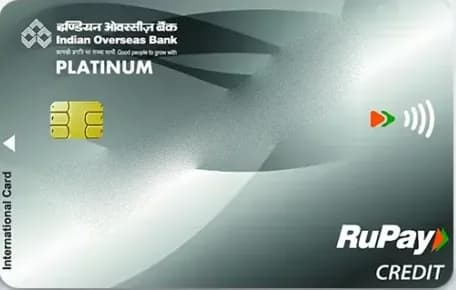
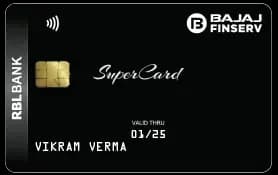
The right choice among IOB RuPay Platinum Credit Card vs RBL Bank Bajaj Finserv SuperCard depends on net value, not just promotional wording. Comparing IOB RuPay Platinum Credit Card (from Indian Overseas Bank), RBL Bank Bajaj Finserv SuperCard (from RBL Bank) in 2026 helps separate recurring costs from usable rewards, travel access, and milestone benefits. IOB RuPay Platinum Credit Card has the lower annual fee, making it the lighter-cost option for long-term ownership. RBL Bank Bajaj Finserv SuperCard leads on the listed reward rate, while IOB RuPay Platinum Credit Card may still suit a different spending pattern.
Fee structures represent a fundamental differentiator in this head-to-head analysis. Specifically, IOB RuPay Platinum Credit Card charges an initial Nil joining fee with an annual renewal charge of Lifetime Free. In comparison, RBL Bank Bajaj Finserv SuperCard charges an initial Nil joining fee with an annual renewal charge of ₹ 499. In India, annual membership charges attract a mandatory 18% Goods and Services Tax (GST), making spend-based fee waiver criteria essential to consider for long-term ownership. Here, IOB RuPay Platinum Credit Card offers annual fee waiver by no spend hurdles (Lifetime Free). Meanwhile, RBL Bank Bajaj Finserv SuperCard offers annual fee waiver by achieving annual retail spend milestones. Factoring in introductory welcome offers—which often offset the first-year joining fee through instant partner vouchers or reward points—helps identify which card yields positive net value right from activation.
Analyzing earning rates and category perks separates marketing highlights from daily practical utility. Across everyday retail merchant spends, IOB RuPay Platinum Credit Card features 0.5 points per ₹100 spent (Points) and offers No complimentary lounge access. On the other hand, RBL Bank Bajaj Finserv SuperCard features 2 Points per ₹100 (Points) and offers Airport Lounge. Beyond core reward rates, cardholders must assess merchant exclusions—such as fuel surcharge waivers, rent payments, educational fee transactions, utility bill payments, and prepaid wallet reloads—where earn rates may be capped or excluded entirely. Furthermore, for frequent travelers, evaluating whether airport lounge visits carry minimum quarterly spend conditions ensures access is readily available during flight layovers.
CardsGuruji's listed score guidance for IOB RuPay Platinum Credit Card is 700+; it is not an issuer requirement. CardsGuruji's listed score guidance for RBL Bank Bajaj Finserv SuperCard is 700+; it is not an issuer requirement. Issuers independently assess applications using their current criteria and the applicant's financial profile; no score guarantees approval. In summary, if your spending is heavily centered on partner merchant ecosystems or zero-maintenance lifetime-free utility, prioritize the card with minimal fees; conversely, if your annual spends easily cross waiver thresholds and you prioritize travel comfort and milestone perks, opt for the card offering superior premium rewards. Review the summary breakdown below for a comprehensive side-by-side comparison.
Side-by-side comparison matrix across annual fees, spend waivers, reward rates, lounge perks, and card details in India (2026).
| Key Metric | IOB RuPay Platinum Credit Card | RBL Bank Bajaj Finserv SuperCard |
|---|---|---|
| Issuing Bank | Indian Overseas Bank | RBL Bank |
| Joining Fee | Nil joining fee | Nil joining fee |
| Annual Renewal Fee | Lifetime Free | ₹ 499 |
| Fee Waiver Milestone | Lifetime Free (No spend criteria) | Annual retail spend milestone |
| Reward Mechanism | 0.5 points per ₹100 spent | 2 Points per ₹100 |
| Welcome Gift / Bonus | Lifetime free with no joining fee | 4000 Points |
| Airport Lounge Access | No complimentary access | Airport Lounge |
| Min. Recommended CIBIL | 700+ (editorial guidance) | 700+ (editorial guidance) |
| Card Network | RuPay | Visa |
| Feature / Attribute | ||
|---|---|---|
Fees & Charges | ||
Annual Fee Recurring yearly card fee | Lifetime Free Zero Cost | ₹ 499 |
Joining Fee Initial fee charged upon approval | — | — |
Annual Fee Waiver Spend milestone to waive annual charges | Not applicable (Lifetime Free) | Standard terms apply |
Foreign Currency Markup Markup fee on overseas and foreign currency transactions | 2% of transaction valueLow Forex Markup | 3.5% + GST |
Interest Rate (APR) Finance charges on revolving balances | 3.5% per month (42% p.a.) | 3.99% |
Rewards & Cashback | ||
Reward Rate Earn rate on card spend | 0.5 points per ₹100 spent | 2 Points per ₹100 |
Reward Currency Form of reward: direct cashback, reward points, or air miles | Points | Points |
Welcome / Activation Gift Introductory vouchers, reward points, or perks | Lifetime free with no joining fee | 4000 Points |
Points Expiry Validity period of earned reward points | Standard (2–3 years) | Standard (2–3 years) |
Travel & Lifestyle Privileges | ||
Airport Lounge Access Domestic & international airport lounge visits | Not Included | Airport Lounge |
Fuel Surcharge Waiver 1% fuel surcharge waiver across petrol pumps in India | No fuel surcharge waiver mentioned | 1% Waiver (Standard) |
Eligibility & Card Specs | ||
Editorial Credit Score Guidance CardsGuruji guidance only; this is not an issuer requirement or approval guarantee | 700+ Good (editorial) | 700+ Average (editorial) |
Payment Network Visa, Mastercard, RuPay, or American Express | RuPay | Visa |
Editorial Verdict: Pros & Cons | ||
Standout Advantages (Pros) Key features that make this card worth having |
|
|
Points to Consider (Cons) Limitations, spending conditions, or exclusions |
|
|
Detailed Cardholder Benefits | ||
All Included Perks Full list of features and rewards cataloged from the bank |
|
|
Explore more side-by-side comparisons for each card in this matchup.
Detailed answers to common questions regarding fees, rewards, waiver milestones, and eligibility for IOB RuPay Platinum Credit Card and RBL Bank Bajaj Finserv SuperCard.
From a cardholder's perspective, The better card depends directly on your spending profile: IOB RuPay Platinum Credit Card is generally superior for cardholders seeking Points with an annual fee of Lifetime Free and earn rates around 0.5 points per ₹100 spent. In contrast, RBL Bank Bajaj Finserv SuperCard is better suited if you want Points with an annual fee of ₹ 499 and benefits of 2 Points per ₹100. Calculate your expected annual spend across each card's accelerated categories minus membership fees to see which delivers a higher net return.
The useful distinction here is simple: For IOB RuPay Platinum Credit Card, the joining fee is Nil and the recurring annual renewal fee is Lifetime Free. In contrast, RBL Bank Bajaj Finserv SuperCard charges a joining fee of Nil and an annual fee of ₹ 499. In India, annual membership charges for both cards are subject to 18% Goods & Services Tax (GST).
Spend-based waivers let you reverse annual renewal charges. For IOB RuPay Platinum Credit Card, the annual fee is waived by no spend requirement as it is Lifetime Free. For RBL Bank Bajaj Finserv SuperCard, you can get the fee reversed by reaching the annual milestone retail spend. Check your average monthly transactions to confirm which milestone you can reach naturally without overspending.
For a practical 2026 decision, IOB RuPay Platinum Credit Card offers 0.5 points per ₹100 spent, with Standard RuPay Platinum rewards structure. No specific cashback or lounge access mentioned in public reviews for this specific IOB variant.. Meanwhile, RBL Bank Bajaj Finserv SuperCard delivers 2 Points per ₹100, with 12X on Online, 1 Point = ₹0.25. If you want hassle-free monthly statement discounts, direct cashback is best; if you plan to redeem for flight tickets or hotel stays, reward point systems often offer higher multiplier returns.
Looking specifically at IOB RuPay Platinum Credit Card vs RBL Bank Bajaj Finserv SuperCard, For airport lounge access, IOB RuPay Platinum Credit Card does not include complimentary airport lounge visits, while RBL Bank Bajaj Finserv SuperCard provides Airport Lounge. Always verify whether either card requires minimum calendar-quarter spends (typically ₹10,000 to ₹50,000 in the preceding quarter) to unlock complimentary access vouchers.
From a cardholder's perspective, IOB RuPay Platinum Credit Card features: "Lifetime free with no joining fee". Meanwhile, RBL Bank Bajaj Finserv SuperCard provides: "4000 Points". These introductory gifts help recoup first-year joining costs right away.
The useful distinction here is simple: CardsGuruji's score guidance for IOB RuPay Platinum Credit Card is 700+; CardsGuruji's score guidance for RBL Bank Bajaj Finserv SuperCard is 700+. This is editorial guidance, not an issuer requirement. Each bank independently evaluates income, employment, existing obligations, repayment history and other criteria; check the current issuer terms, and remember that no score guarantees approval.
Yes, holding both cards simultaneously can be a powerful two-card wallet strategy if they serve complementary spend categories (for example, using one card for online shopping and groceries, and the other for utility bills, travel, or fuel). If both cards are issued by different banks, each bank grants an independent credit limit, which increases your overall available credit and helps lower your credit utilization ratio.
For a practical 2026 decision, Both IOB RuPay Platinum Credit Card and RBL Bank Bajaj Finserv SuperCard standardly offer a 1% fuel surcharge waiver on transactions between ₹400 and ₹4,000 or ₹5,000 at petrol stations nationwide (subject to monthly waiver caps). However, categories like rent payments, wallet reloads, cash withdrawals, and government utility bills are often excluded from earning points or carry separate processing surcharges.
Looking specifically at IOB RuPay Platinum Credit Card vs RBL Bank Bajaj Finserv SuperCard, Choose IOB RuPay Platinum Credit Card if your spending aligns with its primary reward partner ecosystem, you can comfortably achieve its fee waiver milestone, and its fee structure (Lifetime Free) fits your budget. Select RBL Bank Bajaj Finserv SuperCard if you will actively use its unique perks (2 Points per ₹100) and lounge access privileges (Airport Lounge). You can apply for either card online with paperless digital KYC verification.