














CardsGurujiCompare · Choose · SaveCheck all categoriesCheck all issuers
⌘K
Card Categories
Pick a card that matches how you actually spend.
Card Issuers
Explore cards from India's leading banks.
Whether you spend heavily on online shopping, dining, or travel, there's a card on this page built around your lifestyle. This page continues our comprehensive directory of every active credit card in India. We've sorted cards so that hidden gems — cards that smaller banks rarely market aggressively but offer exceptional value — surface alongside well-known names. Use our Compare tool to run a head-to-head analysis of any two cards before you apply.
Credit Cards on This Page — Annual-fee figures may be post-waiver. Always verify on the issuing bank's website before applying.
| # | Card Name | Bank | Annual Fee | Joining Fee | Rating |
|---|---|---|---|---|---|
| 1 | IDFC FIRST Millennia | IDFC FIRST Bank | Lifetime Free | — | — |
| 2 | IDFC FIRST Wealth | IDFC FIRST Bank | Lifetime Free | — | — |
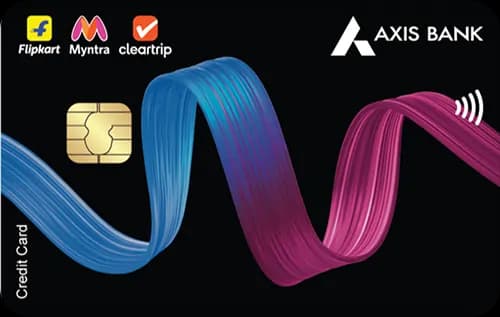
| 3 | Flipkart Axis Bank Credit Card | Axis Bank | ₹ 500 | — | — |
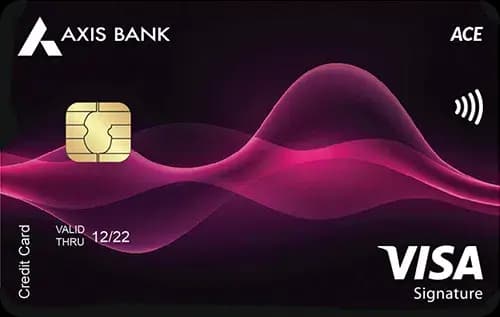
| 4 | Axis Bank Ace | Axis Bank | ₹ 499 | — | — |
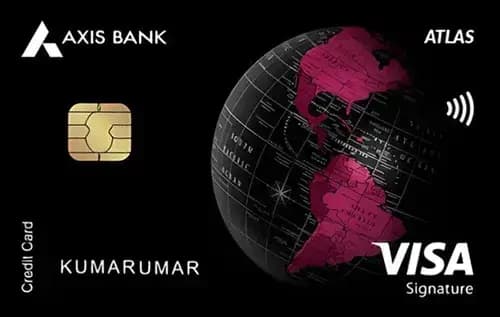
| 5 | Axis Bank Atlas | Axis Bank | ₹ 5,000 | — | — |
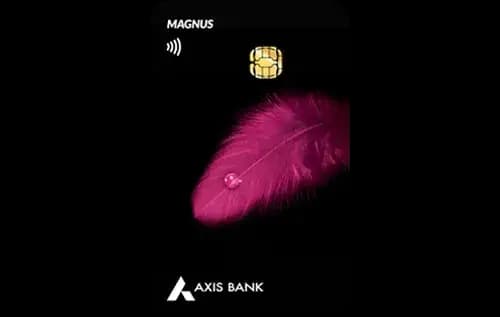
| 6 | Axis Bank Magnus | Axis Bank | ₹ 12,500 | — | — |

Head-to-head comparisons for fuel, e-commerce, and merchant-specific cards featured on this page.
Compare surcharge waivers, reward points on petrol pumps, and grocery spend multipliers across IOCL and HPCL.
See whether 7.5% instant discount on Myntra or 5% broad cashback on Flipkart delivers greater savings.
Analyze monthly cashback limits, statement credit cycles, and merchant category eligibility.
Best for cardholders who prefer simplicity. Cashback is automatically credited to your monthly statement or wallet, with zero catalog devaluation risk.
Best for moderate-to-high spenders who travel or optimize point-transfer ratios into hotel tiers and airline partner miles.
When selecting secondary cards, check beyond the headline annual fee to understand recurring operational costs:
Ranges from 1.5% to 3.5% + GST on international transactions, foreign currency POS, and cross-border subscriptions.
Revolving credit incurs interest from 36% to 45% APR annualized. Always pay the full total amount due, not the minimum.
Most banks now levy a 1% fee on rental payments and utility bills exceeding ₹10,000–₹50,000 per month.
Key answers on maximizing cashback, fuel surcharge waivers, grocery bonuses, and UPI RuPay credit cards.
Most cashback credit cards set a monthly or billing cycle cap on accelerated earnings (commonly ₹1,500 to ₹5,000 per month). For example, a card offering 5% cashback with a ₹2,500 monthly cap will yield rewards on up to ₹50,000 of qualifying purchases in that cycle; any spending beyond ₹50,000 earns the standard base rate (often 1%). Cashback is automatically calculated and credited as statement credit within 1 to 2 billing cycles.
In recent revisions across Indian banks, categories frequently excluded from reward points and accelerated cashback include: fuel pump transactions, wallet loading (Paytm, Mobikwik), residential and commercial rent payments, property management fees, government and tax payments, education and school fee payments, and EMI conversions. Always review the card's Merchant Category Code (MCC) exclusion list to avoid missing out on expected returns.
When paying for petrol or diesel at fuel stations in India, oil marketing companies charge a 1% surcharge (plus GST). Fuel credit cards offer a 1% fuel surcharge waiver for transactions within a specific ticket size—typically between ₹400 and ₹4,000, capped at ₹100 to ₹250 per billing cycle. Note that the 1% base surcharge is refunded, but the GST component levied on the surcharge is non-refundable per RBI and government tax rules.
Yes. RuPay credit cards issued by banks like SBI Card, HDFC Bank, Kotak, Axis, and Punjab National Bank can be linked directly to UPI applications including Google Pay, PhonePe, Paytm, and BHIM. This allows you to scan merchant QR codes at grocery stores, pharmacies, and street vendors to pay directly from your credit line while enjoying the standard 45-day interest-free credit period and earning reward points on small daily spends.
A generic credit card earns uniform reward points across broad spending categories (e.g., 2 points per ₹100 spent everywhere). A co-branded credit card is created in partnership with a specific retail or service brand (e.g., Amazon, Flipkart, Myntra, IndianOil, or IRCTC). Co-branded cards offer accelerated discounts (usually 5% to 10%) with the partner brand, but typically yield lower baseline rewards on unrelated outside merchants.
Grocery credit cards offer 5X to 10X reward multipliers on Merchant Category Codes (MCC 5411 for supermarkets and MCC 5499 for convenience food stores). Many banks now partner directly with quick-commerce platforms like Blinkit, Zepto, Swiggy Instamart, and BigBasket to provide instant cart discounts or accelerated statement cash credits up to a predetermined monthly ceiling.
Banks introduced a 1% convenience fee (plus 18% GST) on credit card rental payments because third-party rental portals were increasingly being used for artificial cash recycling and manufactured spending to meet annual waiver thresholds. Additionally, rent payments via credit cards do not earn reward points on most cards to discourage non-retail liquidity extraction.
Merchant Discount Rate (MDR) is the fee (typically 1% to 2%) charged to the merchant by payment networks (Visa, Mastercard, RuPay) and the issuing bank to process a card payment. The bank uses a portion of this MDR revenue to fund cardholder cashback and reward points. On categories where MDR is zero or capped by government mandates (like UPI QR codes or fuel), banks correspondingly restrict or exclude reward point payouts.
Converting a transaction into an EMI (Equated Monthly Installment) allows you to split the cost over 3 to 24 months at interest rates between 13% and 18% per annum. However, almost all Indian card issuers reverse any reward points or cashback earned on transactions that are subsequently converted into merchant or post-purchase EMIs, and a one-time processing fee of ₹99 to ₹299 plus GST is charged.
If you return an item or cancel an order, the merchant issues a refund back to your credit card account. When the refund credit posts, the issuing bank automatically clawbacks or reverses the corresponding cashback or reward points earned on that transaction. If your reward points balance becomes negative due to a refund, future points earned will first offset the negative balance.
