













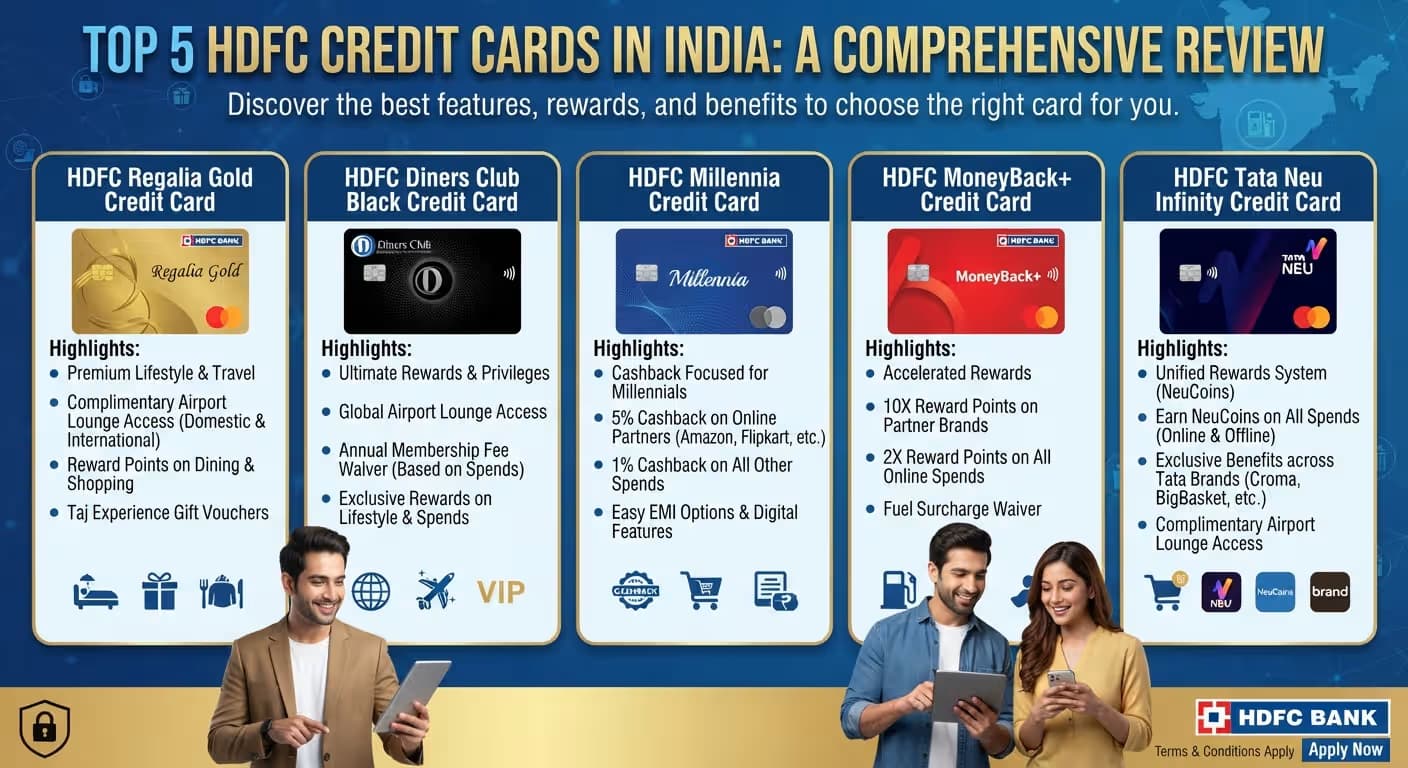
Introduction to HDFC Credit Cards
HDFC Bank is one of the largest and most trusted banks in India, offering a wide range of credit cards to cater to diverse customer needs. With numerous options available, it can be challenging to choose the best HDFC credit card. In this article, we will review the top 5 HDFC credit cards in India, highlighting their features, rewards, and benefits.
1. HDFC Regalia Credit Card
The HDFC Regalia Credit Card is a premium credit card that offers a range of benefits, including travel insurance, airport lounge access, and rewards points. Cardholders can earn 4 rewards points for every Rs. 150 spent, which can be redeemed for travel, dining, or other expenses. The annual fee for this card is Rs. 2,500.
Pros of HDFC Regalia Credit Card:
- Travel insurance coverage up to Rs. 1 crore
- Airport lounge access at over 700 lounges worldwide
- Earn 4 rewards points for every Rs. 150 spent
Cons of HDFC Regalia Credit Card:
- Annual fee of Rs. 2,500
- No cashback offers
2. HDFC Diners Club Black Credit Card
The HDFC Diners Club Black Credit Card is a high-end credit card that offers exclusive benefits, including unlimited airport lounge access, travel insurance, and rewards points. Cardholders can earn 5 rewards points for every Rs. 150 spent, which can be redeemed for travel, dining, or other expenses. The annual fee for this card is Rs. 10,000.
Pros of HDFC Diners Club Black Credit Card:
- Unlimited airport lounge access
- Travel insurance coverage up to Rs. 1 crore
- Earn 5 rewards points for every Rs. 150 spent
Cons of HDFC Diners Club Black Credit Card:
- Annual fee of Rs. 10,000
- No cashback offers
3. HDFC MoneyBack Credit Card
The HDFC MoneyBack Credit Card is a cashback credit card that offers 2% cashback on all purchases, with no upper limit. Cardholders can also earn rewards points, which can be redeemed for travel, dining, or other expenses. The annual fee for this card is Rs. 500.
Pros of HDFC MoneyBack Credit Card:
- 2% cashback on all purchases
- No upper limit on cashback
- Low annual fee of Rs. 500
Cons of HDFC MoneyBack Credit Card:
- No travel insurance coverage
- No airport lounge access
4. HDFC Titanium Times Credit Card
The HDFC Titanium Times Credit Card is a rewards credit card that offers 2 rewards points for every Rs. 150 spent, which can be redeemed for travel, dining, or other expenses. Cardholders can also enjoy benefits like airport lounge access and travel insurance. The annual fee for this card is Rs. 1,000.
Pros of HDFC Titanium Times Credit Card:
- Earn 2 rewards points for every Rs. 150 spent
- Airport lounge access at over 700 lounges worldwide
- Travel insurance coverage up to Rs. 1 crore
Cons of HDFC Titanium Times Credit Card:
- Annual fee of Rs. 1,000
- No cashback offers
5. HDFC Bharat Credit Card
The HDFC Bharat Credit Card is an entry-level credit card that offers benefits like cashback, rewards points, and insurance coverage. Cardholders can earn 1% cashback on all purchases, with no upper limit, and also earn rewards points, which can be redeemed for travel, dining, or other expenses. The annual fee for this card is Rs. 500.
Pros of HDFC Bharat Credit Card:
- 1% cashback on all purchases
- No upper limit on cashback
- Low annual fee of Rs. 500
Cons of HDFC Bharat Credit Card:
- No travel insurance coverage
- No airport lounge access
Comparison of Top 5 HDFC Credit Cards
| Card Name Annual Fee Rewards Points Cashback | |||
| HDFC Regalia Credit Card | Rs. 2,500 | 4 points/Rs. 150 | No cashback |
| HDFC Diners Club Black Credit Card | Rs. 10,000 | 5 points/Rs. 150 | No cashback |
| HDFC MoneyBack Credit Card | Rs. 500 | No rewards points | 2% cashback |
| HDFC Titanium Times Credit Card | Rs. 1,000 | 2 points/Rs. 150 | No cashback |
| HDFC Bharat Credit Card | Rs. 500 | No rewards points | 1% cashback |
Eligibility Criteria for HDFC Credit Cards
To be eligible for an HDFC credit card, applicants must meet certain criteria, including age, income, and credit score. The minimum age requirement is 21 years, and the maximum age is 60 years. The minimum income requirement varies depending on the card, but generally, it is Rs. 25,000 per month for entry-level cards and Rs. 1 lakh per month for premium cards. A good credit score is also essential, with a minimum score of 750 required for most HDFC credit cards.
Fees and Charges for HDFC Credit Cards
HDFC credit cards come with various fees and charges, including annual fees, interest rates, and late payment fees. The annual fee ranges from Rs. 500 to Rs. 10,000, depending on the card. The interest rate is 3.4% per month, and the late payment fee is up to Rs. 1,000. It is essential to understand these fees and charges before applying for an HDFC credit card.
Rewards and Benefits of HDFC Credit Cards
HDFC credit cards offer a range of rewards and benefits, including cashback, rewards points, travel insurance, and airport lounge access. Cardholders can earn rewards points on their purchases, which can be redeemed for travel, dining, or other expenses. Some cards also offer cashback, with up to 2% cashback on all purchases. Travel insurance and airport lounge access are also available on select cards, providing cardholders with a convenient and comfortable travel experience.
How to Apply for an HDFC Credit Card
Applying for an HDFC credit card is a straightforward process that can be completed online or offline. To apply online, visit the HDFC Bank website and fill out the application form. To apply offline, visit an HDFC Bank branch and submit the application form. Required documents include proof of identity, address, and income, as well as a passport-sized photograph. Once the application is submitted, it will be processed, and the credit card will be issued if the applicant is eligible.
How to Choose the Best HDFC Credit Card
Choosing the best HDFC credit card depends on individual needs and preferences. Consider the following factors:
- Annual fee: Choose a card with a low or no annual fee, depending on your usage.
- Rewards points: Consider a card that offers rewards points on your daily expenses, such as groceries or fuel.
- Cashback: If you prefer cashback, choose a card that offers a high cashback percentage.
- Travel benefits: If you travel frequently, consider a card that offers travel insurance, airport lounge access, or other travel-related benefits.
Conclusion
In conclusion, HDFC offers a range of credit cards that cater to diverse customer needs. The top 5 HDFC credit cards in India are the Regalia Credit Card, Diners Club Black Credit Card, MoneyBack Credit Card, Titanium Times Credit Card, and Bharat Credit Card. Each card has its unique features, rewards, and benefits, and choosing the best one depends on individual needs and preferences. By understanding the eligibility criteria, fees and charges, rewards and benefits, and application process, customers can make an informed decision and select the best HDFC credit card for their needs.
Frequently Asked Questions
- What is the minimum age requirement for an HDFC credit card?
- The minimum age requirement is 21 years.
- What is the minimum income requirement for an HDFC credit card?
- The minimum income requirement varies depending on the card, but generally, it is Rs. 25,000 per month for entry-level cards and Rs. 1 lakh per month for premium cards.
- What is the interest rate for HDFC credit cards?
- The interest rate is 3.4% per month.
- What are the rewards and benefits of HDFC credit cards?
- HDFC credit cards offer a range of rewards and benefits, including cashback, rewards points, travel insurance, and airport lounge access.
Practical Tips for Using an HDFC Credit Card
To get the most out of an HDFC credit card, it is essential to use it responsibly and make timely payments. Here are some practical tips:
- Make timely payments to avoid late payment fees and interest charges.
- Use the credit card for daily expenses, such as groceries and fuel, to earn rewards points.
- Take advantage of cashback offers and rewards points to redeem for travel, dining, or other expenses.
- Monitor credit card statements regularly to detect any suspicious transactions.
- Keep the credit card information secure to prevent unauthorized transactions.
Additionally, consider the following tips to maximize your rewards and benefits:
- Use the credit card for online transactions to earn additional rewards points.
- Take advantage of promotional offers and discounts on select cards.
- Use the credit card for international transactions to earn foreign currency marks.